The Rule Nobody Can Explain: Why Your Filter Stack Is Not Defence in Depth
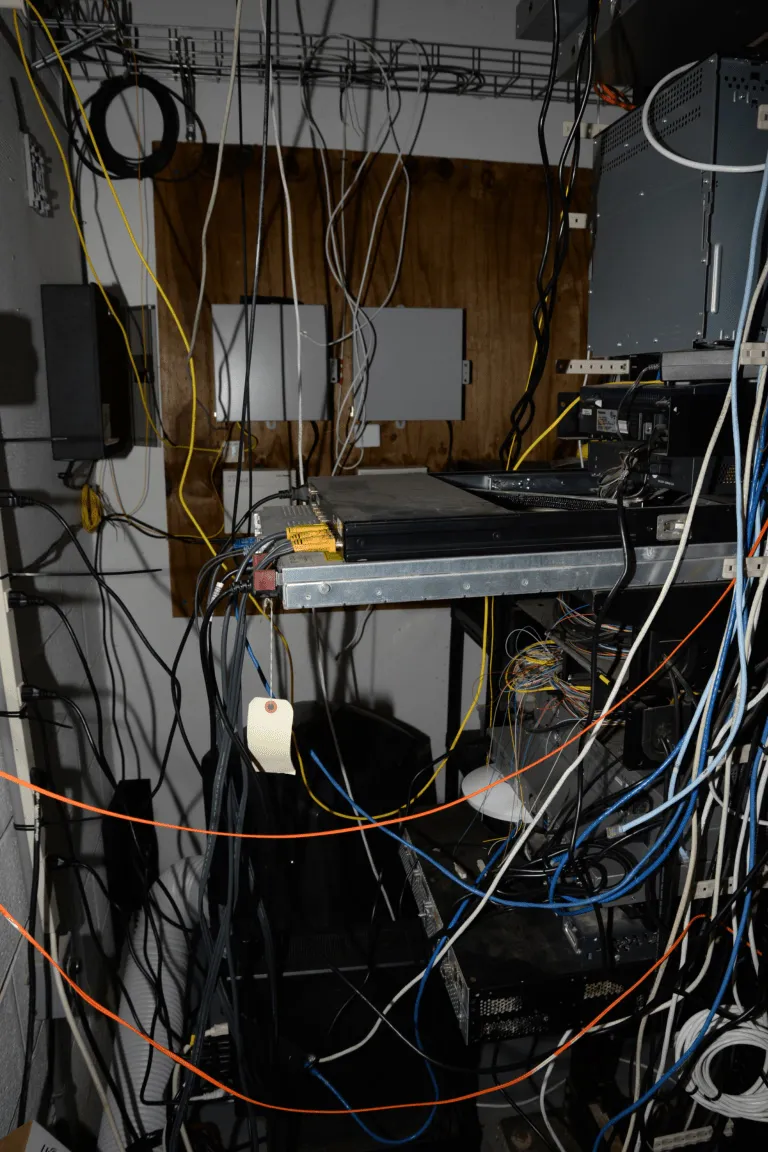
Photo: Federal Bureau of Investigation, Public domain, via Wikimedia Commons
There's a particular smell in a filter console that's been running for six years. Forty-one rules, three of them named 'TEST', two disabled but still firing because of a precedence quirk, and a blocklist that was imported wholesale from a competitor's blog post at some point in 2022.
Everyone knows it's a mess. Nobody touches it, because the last person who touched it broke invoice delivery for a fortnight and the finance director still brings it up at Christmas.
Bolted-on rules are not depth
Defence in depth means independent layers, each of which would still work if the one above it failed. What most small UK organisations have is not that. It's a single decision path with forty opinions stapled to it, where layer four can only see what layer three didn't already rewrite.
That's not depth. It's a queue.
The tell is simple: ask three people which rule would catch a given message and you'll get three answers, all confident, all wrong. If the estate can't be explained, it can't be tested. And if it can't be tested, nobody can tell you whether it works — they can only tell you it hasn't obviously failed yet.
Precedence is where good intentions go to die
Almost every filtering product evaluates in an order — allow lists, then block lists, then content rules, then scoring, then quarantine thresholds. The order matters enormously and is almost never documented.
The classic own goal: a transport rule that allow-lists anything from a trusted partner domain, sitting above the content filter. The partner's mail server gets compromised, the attacker sends from the legitimate domain, and every message sails through. The rule was added for a genuinely good reason in 2023 and has been a hole ever since.
Second classic: two rules that disagree. One action is 'prepend a subject tag', another is 'redirect to quarantine'. Whichever evaluates first wins, silently, and the visible behaviour changes when a vendor updates its engine. Nobody notices until someone asks why the tags stopped.
Maintenance debt has a number
Try this. For each rule, count how many messages it actioned in the last 90 days. Most consoles will give you this, though a few make you work for it.
Then sort descending and look at the bottom of the list. In a typical inherited estate, you'll find something like a quarter of the rules accounting for under 2% of all actions. Those rules cost you a review every time you change anything upstream, and they buy you almost nothing.
That's maintenance debt: the ongoing cost of keeping a rule alive, paid in attention, in exchange for a benefit too small to measure.
The pruning audit
Three weeks, part-time, no new tooling.
Week one — inventory. Export every rule, blocklist entry and allow-list entry with its name, condition, action, order and last-modified date. Put it in a spreadsheet. This alone usually produces a horrified silence in the next meeting, which is a good sign.
Week two — measure. For every rule, find its 90-day hit count. Where the console won't give you one, run it in monitor mode if you can, or grep the logs. Mark anything under ten actions in 90 days as a candidate for retirement. Mark anything last modified before the most recent major platform upgrade as a candidate for re-testing.
Week three — kill things. One at a time. One rule per day, not ten. Note what breaks, if anything. Anything that breaks gets rewritten with a narrower condition, not restored as-was.
Document the survivors
The point isn't a shorter list. It's a list where every line has a sentence beside it explaining what it protects and what would happen if it disappeared. Something like:
Rule 14 — block executable attachments. Blocks .exe, .scr, .js, .iso and .img at the gateway. Actioned 340 times in 90 days. Owner: IT Ops. If removed, these reach the mailbox and rely on endpoint protection alone. Keep.
If you can't write the sentence, you don't know why the rule exists. That's the whole test, and it's brutal in the way good tests are.
Fewer rules, better arguments
Two things happen when you prune properly. First, the estate gets explainable, which means it gets testable, which means you can finally answer 'would this have been caught?' without guessing. Second, the rules that remain get more attention — because there are fewer of them, someone might actually review them.
The uncomfortable conclusion is that many organisations would be better off with a dozen well-understood rules and a working DMARC policy than with fifty rules and none. A filtered-out phishing email is a nice-to-have. A domain that can't be spoofed from outside is a structural fix, and it doesn't need a change advisory board to keep working.
Start with the console you're afraid to touch. It's afraid of you too.